
Scientific research leads the charge for innovation, driving progress across various fields. However, the pursuit of groundbreaking discoveries is often hindered by challenges such as limited computational resources, data management complexities, and the need for seamless collaboration.
Cloud computing or scientific research has emerged as a transformative solution, offering scientists, researchers, and academics the computational power, storage capacity, and collaborative platforms necessary to propel their work forward.
Cloud computing services have revolutionized the way scientific research is conducted by providing on-demand access to a shared pool of configurable computing resources through secure and reliable cloud servers.
Rather than relying on local servers or personal computers, researchers can harness the scalability and flexibility of cloud servers and infrastructure to perform complex computations, analyze vast datasets, and collaborate with peers worldwide.
Virtual Desktop Infrastructure (VDI) is a virtualized cloud desktop solution offered by providers like V2 Cloud. Scientific researchers can access their virtualized desktop environments and applications securely from any device, further enhancing resource scalability, flexibility, and accessibility.
Cloud computing caters to advanced applications for scientific research. From data analysis to high-performance computing, explore how cloud solutions are transforming the research landscape.
Cloud computing provides researchers with scalable, reliable, and cost-effective solutions for storing and managing research data.
Cloud computing enables researchers to access high-performance computing (HPC) resources on demand, without the need for specialized hardware or infrastructure.
Cloud computing offers powerful tools and services for data analysis and processing, enabling researchers to extract meaningful insights from large and complex datasets. In many cases, researchers complement their technical analysis with structured reporting or scientific writing using tools like Writepaper, which help organize findings and streamline the documentation process—especially when managing multiple projects simultaneously.
Cloud computing provides researchers with access to advanced machine learning and artificial intelligence (AI) capabilities, empowering them to develop and deploy AI-driven solutions for scientific research. Integrating cloud machine learning tools can further enhance research efficiency, enabling faster analysis and the development of more sophisticated predictive models.
Cloud computing enables researchers to create virtual laboratories and simulations, allowing them to conduct experiments, test hypotheses, and explore complex systems in a virtual environment.
Despite the numerous benefits of cloud computing, researchers face several challenges when adopting cloud-based solutions:
Researchers must ensure the confidentiality, integrity, and availability of research data stored on the cloud. Addressing these concerns involves implementing robust encryption mechanisms, access controls, and data governance policies to safeguard sensitive information.
Integrating cloud-based solutions with existing IT infrastructure and research workflows presents logistical and technical challenges. Researchers must carefully plan migration strategies, assess compatibility with legacy systems, and ensure seamless integration to minimize disruptions to ongoing research activities.
Effective communication and collaboration between IT teams and research stakeholders are crucial for the successful deployment and adoption of virtualized desktop cloud technologies.
Researchers may encounter performance issues and latency when accessing cloud-based resources, particularly from remote locations or during peak usage periods. These challenges can impact research productivity, data processing times, and user experience.
Researchers must navigate complex regulatory frameworks and legal requirements governing data storage, transfer, and usage in scientific research. Compliance with industry standards, institutional policies, and government regulations is paramount to ensure data integrity, protect intellectual property rights, and mitigate legal risks.
Researchers must establish robust data management practices, maintain audit trails, and adhere to data retention policies to demonstrate compliance with regulatory obligations and maintain the trust of research stakeholders.
Cloud computing offers scalability and flexibility, but researchers must carefully manage resource allocation and control costs to avoid overspending. Optimizing resource usage, rightsizing virtual machines, and leveraging cost-effective pricing models are essential strategies to minimize expenditure while maximizing research outcomes.
Cloud computing offers several key features that are particularly beneficial for scientific research:
Researchers can seamlessly scale their computing resources up or down based on project requirements, eliminating the need for costly hardware investments.
With Virtual Desktop Infrastructure (VDI) solutions provided by V2 Cloud, researchers can dynamically adjust computing resources to accommodate fluctuating workloads, ensuring optimal performance and efficiency.
This flexibility is particularly valuable when managing diverse research demands—ranging from running simulations to preparing technical reports. In situations where time is tight, some researchers even choose to do math homework with Edubirdie, outsourcing repetitive or complex assignments so they can remain focused on high-level innovation and experimentation.
Cloud computing operates on pay-as-you-go pricing models, enabling research institutions to optimize their IT spending and allocate resources more efficiently.
By leveraging VDI solutions from V2 Cloud, researchers can reduce capital expenditures associated with hardware procurement and maintenance, while also minimizing operational costs related to infrastructure management and support.
Cloud platforms facilitate seamless collaboration among multidisciplinary research teams, allowing researchers to share data, insights, and resources in real time.
With V2 Cloud’s VDI solutions, researchers can collaborate effectively regardless of geographical barriers, accessing shared desktop environments and applications from any location, at any time.
Enhanced collaboration capabilities enable faster decision-making, accelerated research cycles, and increased productivity across research teams.
Cloud computing provides researchers with any time, anywhere access to computing resources, empowering them to work remotely or across different geographical locations.
V2 Cloud’s VDI solutions enable researchers to access their desktop environments and applications securely from any device with an internet connection, ensuring uninterrupted productivity and seamless workflow continuity.
Remote access capabilities enhance flexibility and work-life balance for researchers, enabling them to pursue their research objectives without constraints imposed by physical location or time zone differences.
Leading cloud providers implement robust security measures and compliance standards to safeguard sensitive research data and ensure regulatory compliance.
V2 Cloud prioritizes data security and compliance, offering encrypted connections, multi-factor authentication, and data isolation features to protect research data from unauthorized access, data breaches, and compliance violations.
With V2 Cloud’s VDI solutions, researchers can work with confidence, knowing that their data is protected and their compliance requirements are met.
With our VDI solution, we provide real-time malware protection and nightly scans managed by Malwarebytes Pro antivirus. Additionally, this plan encompasses daily snapshots with offline retention, ensuring comprehensive protection against ransomware.
Cloud computing offers built-in disaster recovery and business continuity capabilities, providing researchers with peace of mind in the event of unforeseen disruptions or data loss incidents.
V2 Cloud’s VDI solutions include automated backups, failover mechanisms, and redundant infrastructure to ensure continuous access to research data and applications, even in the face of disasters or system failures.
By leveraging cloud-based disaster recovery solutions, researchers can minimize downtime, mitigate data loss risks, and maintain productivity during adverse events.
To maximize the benefits of cloud computing and overcome adoption challenges, research institutions should follow best practices such as:
Our Virtual Desktop Infrastructure (VDI) solutions are specifically tailored to the needs of scientific research, offering a variety of packages with different virtual machine specifications.
Researchers can choose a package that meets their computational requirements, ensuring optimal performance for resource-intensive applications for example Matlab and Tableau.
V2 Cloud, your premium VDI provider, is committed to driving scientific research forward with our advanced Virtual Desktop Infrastructure (VDI) solutions. Our platform ensures accessibility, security, and scalability, empowering researchers to work efficiently from anywhere.
Experience the unparalleled performance of V2 Cloud and discover firsthand the benefits of enhanced computational resources, enhanced security, and remote accessibility.
Sign up for our trial offer today and discover the difference for yourself. We’re here to support you every step of the way.
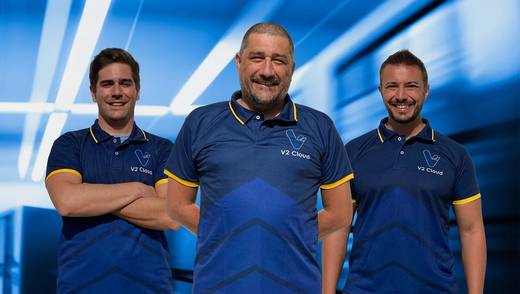
Your V2 CloudCare team — real people, on the line.


