5 Best Digital Transformation Solutions: Features & Benefits
April 29, 2026

April 29, 2026
Imagine running a business that’s more agile, efficient, and ready to scale—this is the promise of digital transformation.
In fact, 74% of organizations already prioritize these solutions to stay ahead of the curve. As CTOs, IT Directors, or a business owner, you understand that technology is no longer just a tool, it’s the backbone of modern business success.
Aligning digital transformation efforts with business objectives can drive remarkable business outcomes, ensuring that your strategy is comprehensive and effective.
If digital transformation isn’t part of your roadmap yet, you might be missing out on crucial growth opportunities. Without it, competitors may outpace you with faster processes, lower costs, and better customer experiences.
The good news? It’s not too late to catch up or optimize your strategy.
Whether you’re planning to adopt new technologies or upgrade existing ones, understanding the best digital transformation solutions is key to staying competitive and improving business processes to drive long-term success. In many cases, this includes working with trusted digital transformation services providers to guide implementation and ensure scalability.
Digital transformation involves leveraging cutting-edge technologies to meet evolving market demands. Whether it’s automating workflows or enhancing customer experiences, digital transformation empowers businesses to stay agile, efficient, and scalable.
Digital technologies play a crucial role in enhancing business processes and efficiency, driving comprehensive integration across various operational facets. For many organizations, achieving this level of transformation often involves IT modernization, ensuring their infrastructure and applications evolve to meet new digital demands.
Leveraging digital solutions for healthcare can streamline patient care processes, improve operational efficiency, and enhance decision-making through advanced data analytics.
However, it goes beyond adopting the latest technology: it’s about rethinking how your entire business operates.
By integrating digital tools into every area of your organization, you’re not just upgrading processes; you’re reshaping how value is delivered to customers.
This means creating new business models, streamlining operations, and fostering a culture that thrives on innovation.
The impact is undeniable. Digital technology has a profound effect on various industries, making it necessary for organizations to adapt to remain competitive.
Businesses that embrace digital transformation see increased operational efficiency, faster time-to-market, and reduced costs.
It enables seamless scalability, so you can respond quickly to changing demand and expand into new markets with confidence.
Moreover, companies that invest in digital solutions gain a competitive edge. It can be as small as using a free QR code generator to share business details to as big as using a dynamic CRM to manage relationship with customers. Platforms like Uniqode make this even easier by enabling businesses to create branded, trackable QR codes that seamlessly connect offline materials with digital experiences, which is an easy first step toward smarter transformation. Every small step counts in digital transformation.
With real-time data and adaptive systems, these companies are better equipped to anticipate market shifts and meet customer needs faster than those who haven’t yet made the digital leap.
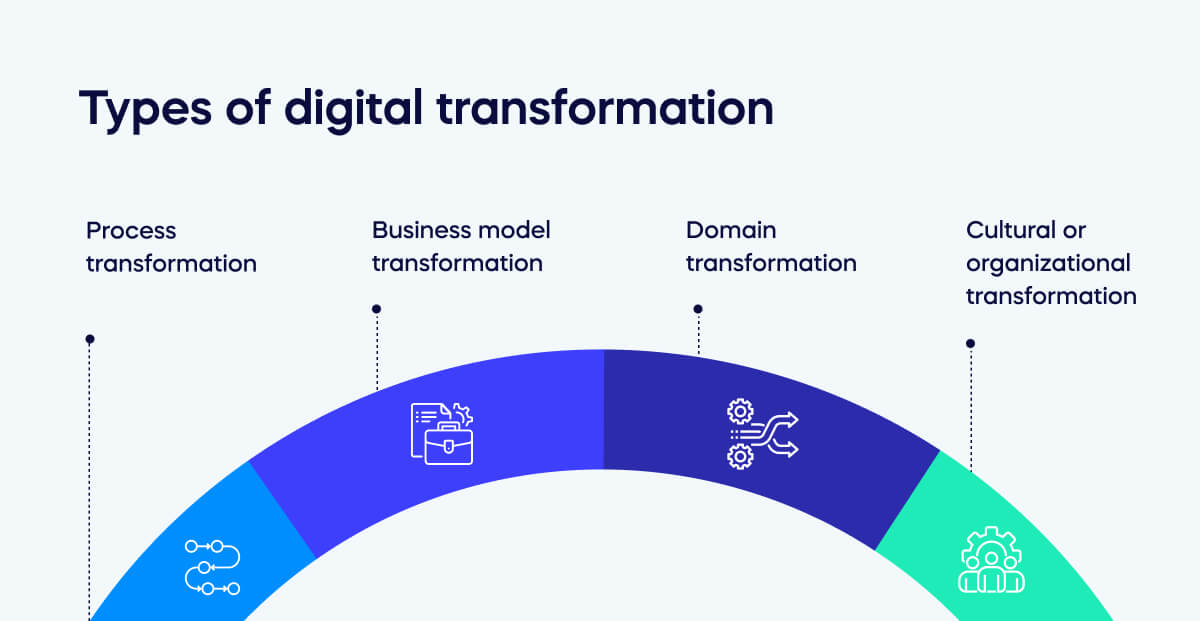
Technology is the driving force behind digital transformation, empowering businesses to innovate, streamline operations, and engage with both customers and employees in entirely new ways.
Digital transformation is important as a necessary response to industry disruption and fierce competition, improving efficiency, maximizing revenue growth, and reducing operational costs.
It forms the foundation of every modern digital strategy, transforming how companies operate and compete. Digital transformation initiatives are essential for achieving cost efficiencies and enhancing productivity across various organizational functions.
From automating routine tasks to providing advanced insights for decision-making, technology opens up new possibilities that traditional methods simply can’t match.
Increasingly, organizations are adopting solutions that generate dynamic QR codes to enhance customer engagement, simplify data collection, and streamline business workflows.
The key technologies that play a critical role in digital transformation include:
Cloud platforms offer businesses the infrastructure, software, and storage they need without the burden of maintaining physical IT systems.
This translates to greater flexibility and scalability, allowing companies to adapt quickly to changing market demands while minimizing costs.
Cloud solutions also enable businesses to access and deploy resources globally, ensuring seamless operations from anywhere.
AI enhances business operations by automating processes, providing predictive analytics, and improving customer interactions.
From chatbots managing customer service inquiries to machine learning algorithms forecasting trends, AI and ML development services empower faster, data-driven decisions that enhance efficiency and tailor customer experiences. AI answering services further enhance this by providing seamless, real-time support, reducing response times, and ensuring customers receive instant, accurate assistance around the clock. To further enhance AI integration, businesses are increasingly turning to AI gateways. These gateways enable centralized access to powerful AI models, streamlining the way organizations integrate and scale AI-driven solutions across various business operations. By using AI gateways, businesses can better manage costs, access, and compliance, ensuring that the full potential of AI is harnessed efficiently and securely.
IoT connects everyday devices to the Internet, enabling them to communicate and share data in real time. This connectivity leads to more efficient use of resources, predictive maintenance that reduces downtime, and enhanced safety. Partnering with experts in Internet of Things services can help businesses unlock the full potential of IoT technology, enabling them to build connected systems that enhance efficiency, scalability, and innovation. Working with a specialized IoT application development company ensures these systems are built with robust architecture, seamless integration, and the flexibility to scale as business needs evolve.
IoT is particularly transformative in industries like manufacturing, logistics, and healthcare, where it drives operational excellence and cost savings.
By adopting these technologies, businesses can move away from traditional, rigid models and build dynamic, agile structures that stay competitive in today’s fast-evolving digital landscape.
Digital transformation offers immense benefits, but the journey is not without challenges.
Many businesses struggle to implement new technologies effectively, facing roadblocks that can slow or even derail their transformation efforts.
Below are some of the most common challenges, along with practical solutions to overcome them.

One of the biggest hurdles is employee resistance. People are often hesitant to embrace new technologies and workflows, especially if they fear job displacement or lack technical skills.
Solution: Focus on change management by involving employees early in the process. Provide training and support that demonstrates the personal and business benefits of the transformation. Investing in digital adoption strategies can also help employees learn new tools faster and reduce friction during implementation.
Encouraging a culture of innovation and open communication can help ease the transition.
The initial investment in digital tools and infrastructure can be daunting, especially for small to medium-sized businesses (SMBs). Cloud services, AI, and IoT often require significant capital, which may strain budgets.
Solution: Opt for scalable, pay-as-you-go solutions like cloud computing. Platforms like V2 Cloud offer flexible pricing models with no hidden fees, allowing businesses to start small and scale as needed.
This approach minimizes upfront costs while still delivering the benefits of digital transformation services.
Many businesses rely on outdated legacy systems that don’t integrate easily with modern digital tools. This can create inefficiencies and disrupt the adoption of new technologies.
Solution: Look for digital transformation solutions that offer strong integration capabilities.
Platforms like V2 Cloud ensure seamless integration with existing infrastructure, minimizing disruption and allowing businesses to continue using critical legacy systems while modernizing other aspects of their operations.
As businesses move their operations online, the risk of cyberattacks increases. Protecting sensitive data and maintaining compliance with data protection regulations becomes more complex with digital tools.
Solution: Prioritize security by choosing solutions with built-in cybersecurity features. V2 Cloud, for example, offers secure remote access, daily backups, and robust antivirus protection.
Additionally, ensuring that your team is trained on best cybersecurity practices can help mitigate risks.
Jumping into digital transformation without a clear plan often leads to disjointed efforts, wasted resources, and missed opportunities. Businesses may adopt technologies without fully understanding how they fit into their long-term goals.
Solution: Start with a clear, detailed digital transformation strategy that aligns with your business objectives. Assess your current processes, identify gaps, and set measurable goals.
Working with an experienced partner like V2 Cloud can help create a tailored roadmap that meets your specific needs and ensures smooth execution.
Embarking on a digital transformation journey can feel overwhelming, but breaking it down into manageable steps ensures a smoother process and more successful outcomes.
Below is a practical, step-by-step guide to help your business plan and execute an effective digital transformation strategy.
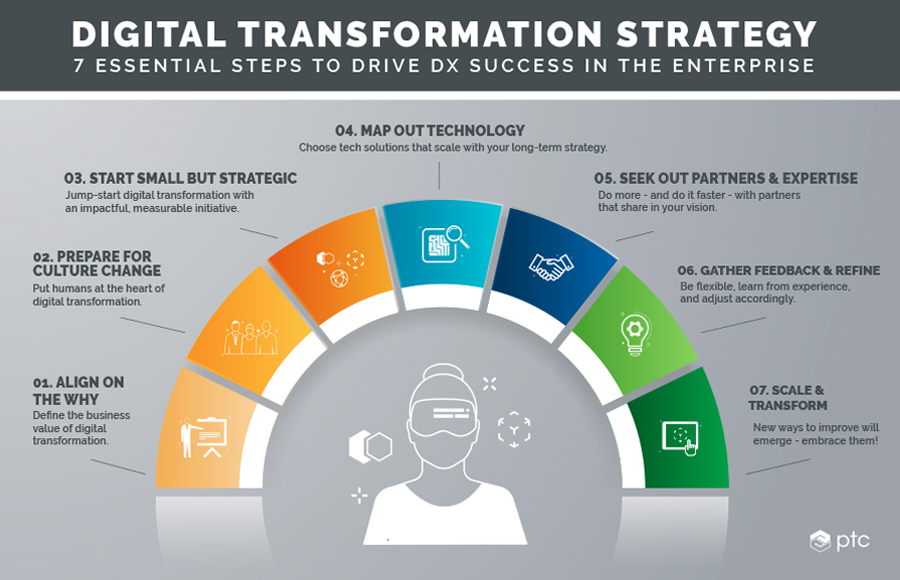
Before diving into digital transformation services, start by conducting a comprehensive assessment of your existing IT systems and business objectives.
Identify any gaps in technology or processes and clarify your long-term goals—whether it’s improving efficiency, enhancing customer experience, or scaling operations.
Once you understand your current setup and objectives, define a clear strategy that aligns with your business’s needs. Determine which processes need to be digitized, set measurable goals, and establish timelines.
This strategic roadmap will guide your team through the transformation, ensuring that every decision contributes to your overall vision.
Selecting the right technology is crucial for a successful transformation. Evaluate various solutions, considering factors like scalability, security, cost, and ease of use.
Cloud computing, AI, and IoT are all key components of digital transformation, but your choice should align with your specific business goals.
One of the biggest challenges in digital transformation is getting employees on board.
It’s essential to train your staff on new tools, explain the benefits of digital transformation, and provide ongoing support to ensure smooth adoption.
Creating a culture of innovation will help employees embrace new technologies.
Once the planning and training phases are complete, it’s time to implement your digital transformation. Start with small, manageable changes before scaling up.
Monitor progress regularly to ensure that the transformation is driving the desired results. Use KPIs and data analytics to track performance and adjust strategies as necessary.
Digital transformation is an ongoing process, not a one-time project. As your business grows and market conditions change, continue to refine and scale your digital strategy.
Use the insights gained from your initial implementation to optimize processes, innovate, and stay ahead of the competition.
Selecting the ideal digital transformation solution is critical to ensuring that it aligns with your business’s specific needs and growth objectives. Here are some essential criteria to consider:
In a digital landscape rife with cyber threats, robust security features are non-negotiable. Your solution must safeguard sensitive data and maintain compliance with industry regulations (e.g., GDPR, HIPAA).
Look for features like encryption, multi-factor authentication, and regular security updates to minimize risk.
Assessing your current IT infrastructure and business goals is equally important.
This assessment will help you understand your current capabilities and identify gaps that the new technology needs to fill, ensuring that the chosen solution supports your long-term business strategy.
When selecting a digital transformation solution, it’s essential to compare the leading platforms and evaluate how they meet your business needs.
Below is a detailed comparison of the five top digital transformation solutions, including their key features and benefits.
V2 Cloud specializes in virtual desktop infrastructure (VDI), providing an all-in-one solution for businesses looking to enhance remote access, scalability, and security.
Designed especially for small to medium-sized businesses (SMBs), V2 Cloud delivers powerful cloud computing without the complexity or high cost of traditional IT setups.
Best For: SMBs needing an affordable, scalable, and secure virtual desktop solution to enable remote work and streamline IT management.
Microsoft Azure is one of the most versatile cloud platforms, offering a broad range of services, from Infrastructure as a Service (IaaS) to Software as a Service (SaaS).
Azure integrates seamlessly with existing Microsoft enterprise tools, making it an ideal choice for businesses already using Windows-based products.
Best For: Enterprises already leveraging Microsoft tools or seeking comprehensive cloud solutions with strong integration and hybrid cloud options.
AWS is the market leader in cloud infrastructure, offering an extensive range of cloud services designed to support businesses of all sizes.
Its vast global network ensures reliable and fast cloud computing, storage, and machine learning capabilities.
Best For: Large enterprises and tech-driven companies seeking comprehensive cloud infrastructure with a global footprint and a wide array of advanced services.
Google Cloud excels in data analytics, artificial intelligence, and machine learning, making it ideal for businesses focused on innovation and data-driven decision-making.
Known for its powerful tools and ease of use, Google Cloud is particularly attractive to companies looking to leverage data for business growth.
Best For: Companies heavily focused on data analytics and AI-driven innovations, especially those needing robust machine learning tools.
IBM Cloud is a strong contender for businesses seeking flexibility in their cloud infrastructure and advanced solutions for industries like healthcare, finance, and manufacturing.
IBM’s focus on AI and hybrid cloud solutions makes it particularly suitable for businesses that need tailored, enterprise-grade services.
Best For: Enterprises in industries such as healthcare, finance, and manufacturing, needing AI-powered solutions and strong hybrid cloud capabilities.
V2 Cloud is uniquely positioned to help small and medium-sized businesses (SMBs) navigate the complexities of digital transformation.
Unlike larger, more complicated platforms, V2 Cloud offers a streamlined, user-friendly solution that delivers powerful cloud computing capabilities without the need for deep technical expertise or hefty upfront investments.
Here’s how V2 Cloud empowers SMBs to thrive in today’s digital landscape:
One of the biggest barriers to digital transformation for SMBs is complexity. V2 Cloud eliminates this hurdle with its intuitive interface and simplified management.
Setting up virtual desktops, managing cloud resources, and securing remote access are all done through a user-friendly dashboard that doesn’t require a dedicated IT team.
V2 Cloud enables employees to access their virtual desktops from anywhere in the world, ensuring business continuity and flexibility.
With fast, reliable connections to global data centers, teams can collaborate seamlessly, whether they’re in the office, working from home, or on the go.
As your business grows, so do your technology needs.
V2 Cloud offers scalable cloud infrastructure, allowing SMBs to easily adjust their resources up or down without worrying about performance bottlenecks or costly hardware upgrades.
This flexibility ensures that your IT setup evolves alongside your business.
For SMBs, managing budgets is critical. V2 Cloud’s pricing model is designed with transparency in mind—there are no hidden fees or complicated contracts.
Businesses pay only for what they use, with flexible pricing plans that adapt to their needs.
Data security is often a concern for SMBs, especially when moving to cloud-based systems.
V2 Cloud addresses this with built-in security features, including secure remote access, daily backups, and integrated antivirus protection.
Additionally, V2 Cloud adheres to strict data protection standards, ensuring compliance with industry regulations such as GDPR and HIPAA.
Are you ready to elevate your business’s operational efficiency and competitive edge? With V2 Cloud’s digital transformation solutions, you can transform your business model, making your operations not only more efficient but also more adaptable and secure.
To learn more about how our digital transformation services can support your business transformation in the digital landscape, visit our website.
Talk to a Cloud Expert Today and start your path toward a more advanced, secure digital workspace that’s perfectly equipped to meet the demands of today’s fast-evolving business environment.

Your V2 CloudCare team — real people, on the line.