IT Infrastructure Modernization and Strategies for Updating Legacy Systems
July 14, 2026

July 14, 2026
Outdated IT systems bring high maintenance costs, security risks, scalability problems, and integration issues. These challenges can stunt business growth and hurt efficiency.
As your business evolves, relying on legacy IT infrastructure leads to more downtime, higher costs, and falling behind competitors. By embracing modernization, you can use the latest technologies, ensuring your IT infrastructure is scalable, secure, and efficient.
In this blog post, we’ll provide actionable insights and strategies for IT professionals and decision-makers to modernize legacy IT infrastructure. Explore the benefits of modernization and practical steps for a seamless transition, and make informed decisions that drive your business forward.
Legacy IT infrastructure often struggles to meet the demands of modern business environments. Some common challenges include:
Modernizing legacy IT infrastructure is crucial for several reasons:
Failing to modernize legacy IT infrastructure can expose businesses to several risks:
Successful IT infrastructure modernization requires a strategic approach. Here are some effective strategies:
Begin by conducting a thorough assessment of your existing IT infrastructure. Identify areas that need improvement, outdated systems, and components that are still functioning well. This assessment will help prioritize modernization efforts.
This is where product portfolio planning solutions can add value by helping IT leaders map systems against business value, maintenance costs, and strategic fit, turning prioritization into a more data-driven process.
Create a detailed plan outlining the steps needed to modernize your IT infrastructure. Include timelines, budget estimates, and resource requirements. A well-defined plan ensures a smooth transition and minimizes disruptions.
Cloud computing offers numerous benefits for IT modernization, including scalability, flexibility, cost-efficiency, and support for modern technologies such as artificial intelligence platforms. Migrating to cloud-based solutions can reduce the need for physical hardware and simplify infrastructure management.
DevOps promotes collaboration between development and operations teams, enhancing the efficiency of IT processes. Implementing DevOps practices can streamline the deployment of new technologies and improve system reliability.
Replace outdated hardware and software with modern alternatives. Consider investing in technologies that offer better performance, energy efficiency, and security features.
Ensure that security is a top priority throughout the modernization process. Implement advanced security measures, conduct regular vulnerability assessments, and stay updated with the latest security trends.
Equip your IT team with the skills and knowledge needed to manage modern infrastructure. Provide training on new technologies, best practices, and security protocols to ensure a smooth transition.
Cloud computing plays a pivotal role in modernizing IT infrastructure. Here are some key benefits:
Modernizing IT infrastructure requires the right set of tools. Here are some top IT modernization tools, including V2 Cloud:
V2 Cloud offers a comprehensive Virtual Desktop Infrastructure (VDI) solution that enhances IT service delivery. It provides secure remote access, daily backups, antivirus protection, and 24/7 monitoring, ensuring efficient and secure IT operations.
V2 Cloud is known for its easy scalability and accessible pricing, making it an excellent choice for businesses looking to modernize their IT infrastructure.
Astera is a comprehensive data integration platform designed to streamline IT modernization efforts. It offers powerful data mapping, transformation, and integration tools that help organizations modernize their data infrastructure and ensure seamless data flow across various systems.
AWS Serverless Application Model (SAM) is a framework for building serverless applications on AWS. It simplifies the deployment and management of serverless functions, allowing developers to build modern, scalable applications without managing the underlying infrastructure.
CUBA Platform is an open-source framework for enterprise application development. It provides a rich set of tools and libraries that accelerate the development process, making it easier to modernize legacy applications and build new, scalable solutions.
Red Hat OpenShift is a Kubernetes-based container platform that enables organizations to develop, deploy, and manage containerized applications. It offers robust automation, scalability, and security features, making it a key tool for IT modernization.
Docker is a widely used platform for developing, shipping, and running applications in containers. Containers provide a consistent environment for application development and deployment, making it easier to modernize legacy applications and streamline the software development lifecycle.
SonarQube is an open-source platform for continuous inspection of code quality. It helps developers detect bugs, vulnerabilities, and code smells early in the development process, ensuring that modernized applications meet high standards of quality and security.
Microsoft PowerApps is a low-code platform that enables organizations to build custom applications quickly and easily. It supports rapid application development and integration with various data sources, making it a valuable tool for IT modernization projects.
Transpilers, such as Babel, are tools that convert source code written in one programming language into another. They are useful for modernizing legacy codebases, allowing developers to leverage modern programming languages and features while maintaining compatibility with existing systems.
Modernizing IT infrastructure is essential for businesses to stay competitive, reduce operational costs, and enhance system performance. By addressing the challenges of legacy systems and adopting modern technologies, organizations can achieve significant improvements in efficiency, security, and scalability.
V2 Cloud stands out as a comprehensive solution for IT infrastructure modernization, offering secure, scalable, and cost-effective virtual desktop infrastructure. By integrating V2 Cloud into your modernization strategy, you can ensure a seamless transition and support your business growth.
At V2 Cloud, we provide more than just a VDI solution. Our platform offers secure remote access, daily backups, antivirus protection, and 24/7 monitoring, ensuring your IT operations run smoothly. With our scalable and flexible approach, you can easily adapt to the changing needs of your business. Choose V2 Cloud to modernize your IT infrastructure and drive your business forward.
Take the next step in modernizing your IT infrastructure with V2 Cloud. Talk to a Cloud Expert Now to experience our secure, scalable, and efficient VDI solution tailored to your business needs.
Read our most frequently asked questions for more information on IT infrastructure modernization:
Modernizing IT infrastructure requires robust security for both cloud-native and legacy applications. Key steps include encryption, regular audits, and compliance. Leveraging hybrid cloud environments can further enhance security and protect business processes.
Modernizing IT infrastructure optimizes business processes by enhancing system performance and flexibility. Upgrading to enterprise applications and adopting cloud-native solutions reduces downtime and improves efficiency, leading to improved customer satisfaction.
A hybrid cloud approach offers flexibility, scalability, and cost-efficiency. It supports both cloud-native and legacy applications, optimizing resource use and enhancing disaster recovery, which improves business processes and customer satisfaction.
Application development can be accelerated by leveraging modern IT practices and modern frameworks. Focus on cloud-native and containerized applications, while modernizing legacy applications to enhance integration with enterprise applications, leading to improved customer satisfaction.
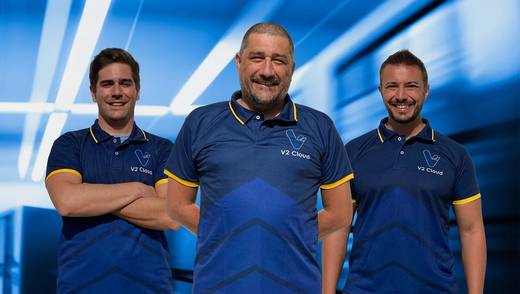
Your V2 CloudCare team — real people, on the line.


