
Last updated: 2025-09-26
We hope you were able to join us at the MSP Summit in Orlando in mid-September. The content across the sessions was outstanding, and we have been noodling on the lessons learned and distilling them down to the key takeaways.

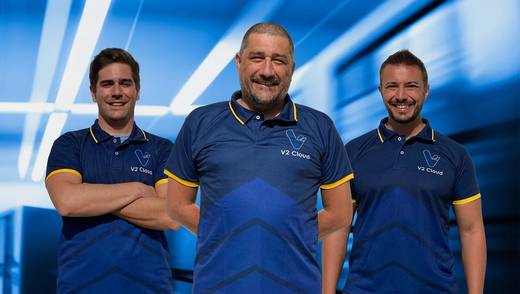
Our team at the MSP Summit 2025
Few of us were around for the birth of AI in 1950, pioneered by Alan Turing, and subsequently expanded upon by John McCarthy in 1956. However, many of us have been studying the evolution of AI for decades.
The point here is to recognize that AI was one of the earliest forms of computing, and despite the hype and over-promise in more recent times, we are in the early stages of a transformative era of mass AI adoption.
One of the most compelling messages about AI at the MSP Summit was the connectivity between one of the most proven abilities of AI—automating tasks and processes — and the prime directive of MSPs to redefine their focus from monetizing transactions to elevating their ability to deliver value.
It’s critical to note that AI can apply a level of intelligence that is fundamentally more versatile and adaptive than traditional machine learning.
But there are also many caveats of deploying AI within well-defined guardrails for specific functions that shore up business fundamentals without compromising IP and data security.
Disaster Recovery as a Service (DRaaS), Multi-factor authentication (MFA), Zero Trust, cybersecurity, and the numerous layers that comprise a programmatic approach to security and business resilience are well-known. But a significant gap in security matters remains, particularly for the smaller clients of MSPs, in achieving preemptive action over recognition.
A recommended solution to security is to benchmark your organization’s security posture against that of your peers. The aim is to achieve a higher level of security than most, operating on the principle that attackers will target less protected systems. This strategy suggests avoiding an overly exhaustive “boil the ocean" approach to security.
Not trying to outrun the bear, but making sure to outrun the others around you is sage advice. In keeping with this, clients will often have different priorities for security. Offering a menu of security services will likely be more successful than pushing clients to adopt an all-encompassing solution, regardless of the risk that is left exposed.
52% of the MSPs today are generalists, facing increasing margin pressure and commoditization of services. Specialists are growing faster because they solve complex, high-value problems that customers can’t easily insource or commoditize (Canalys MSP Trends and Predictions Report, 2025).
Based on the 2025 Canalys MSP Trends and Predictions Report, MSP generalists are predicted to lose 10% to 15% share against specialists in the next 5 to 7 years. (Canalys MSP Trends and Predictions Report, 2025)
Here are a few of the tactics that generalists can pursue to retain relevance:
Here is a comparison of MSP Generalists vs. Specialists, showing the predicted market shift over the next five to seven years based on industry surveys:
| Factor | Generalist MSPs | Specialist MSPs |
| Current Market Share | Roughly 52% | ~48% |
| Market Trend | Face increasing margin pressure and commoditization | Growing faster |
| Future Prediction | Predicted to lose 10% to 15% market share in 5–7 years | Gaining market share |
| Value Proposition | Offer a broad range of IT services without focusing on a specific industry or solution specialty | Solve complex, high-value problems that are hard to insource |
| Strategy for Relevance | Create ‘MSP-as-a-service’ suites; double down on customer intimacy | Focus on specific domain expertise (e.g., DRaaS, security) |
High margin, value-added, and highly sticky revenue are core objectives for any MSP. These are also the criteria that determine the Monthly Recurring Revenue (MRR)/ Annual Recurring Revenue (ARR) multiples in acquisitions.
For those thinking of an exit strategy, the most suitable approach will emerge naturally by concentrating on current business fundamentals rather than attempting to superficially enhance the business for a sale.
If you’re interested in picking up the Mergers and Acquisitions (M&A) phone, hopefully, the right call will come at the right time, supported by sound strategies that have materialized in your customer composition.
MSP matchmaking services are growing, but the onus remains largely on the senior leadership at MSPs to pick the right vendors. There are a few things to look for. These include finding partners that truly understand the meaning of the word and don’t treat you like a transaction.
They should have a structured, multi-tiered, customizable partner program and direct access to their vision and roadmap for your guidance.
Partners should also have domain expertise and demonstrate how their partnerships have enabled other MSPs to achieve both high performance and profitability.
Another key indicator is the existence of a formal Partner Advisory Board and participation at seminal MSP summits.
V2 Cloud has been an innovator in the Virtual Desktop Infrastructure (VDI) industry since 2012, with 1000s of clients and 100s of MSP and Independent Software Vendors (ISV) partners. We were thrilled to announce the enhanced V2 Cloud Partner Program at the 2025 MSP Summit in Orlando.
V2 Cloud has grown from a bold ambition to liberate small and medium-sized businesses from the hassle of IT complexities. Our mission is to provide SMBs with the tranquility of a secure, efficiently managed, and effortlessly accessible cloud-based IT infrastructure, anywhere and anytime.
V2 Cloud abstracts the complexity of traditional IT by providing simple, holistic, secure, and fully managed cloud computing resources that encompass your Windows® desktops, databases, files, and web servers, GPU requirements, and Linux, through global data centers and deep expertise in managing virtual environments.
Book a meeting with our Partner Specialist to learn more about the perks of partnering with our cloud experts.
See you in Vegas in April!
1. Who is the V2 Cloud Partner Program designed for?
The Partner Program is designed specifically for two groups: Managed Service Providers (MSPs) and Independent Software Vendors (ISVs). At V2 Cloud, we collaborate with both MSPs and ISVs to help them deliver exceptional IT services, drive growth, and enhance customer satisfaction.
The Partner Program offers solutions tailored for MSPs, such as virtual desktops, servers, and application hosting, and solutions for ISVs, ensuring their applications achieve their full potential as fast, reliable, and secure SaaS solutions.
2. What are the key business and growth benefits offered to V2 Cloud partners?
Partners receive solutions intended to help them earn more and worry less. Our goal with the Partner Program is to go beyond cloud solutions and offer exclusive perks. When you join the program, you get access to co-branded marketing collateral, technical assistance when you need it, and personalized support from your Account Manager.
Discover the exclusive perks and book a call with our Partner Specialist today.
3. What kind of support and training can a partner expect?
Partners benefit from personalized and priority support. This includes working directly with a dedicated account manager who provides guidance to maximize partnership success.
Furthermore, partners receive technical assistance through priority support for integration challenges and dedicated assistance from the engineering team. To ensure partners stay updated, V2 Cloud also provides exclusive training sessions, webinars, and certification programs.
4. Why must MSPs pursue specialization?
MSPs must pursue specialization because 52% of generalist MSPs are currently facing increasing margin pressure and commoditization of services. Specialization is considered a survival strategy.
Specialists are growing faster because they focus on solving complex, high-value problems that are difficult for customers to insource or commoditize. Failure to specialize could lead to generalists losing 10% to 15% share against specialists in the next five to seven years.
5. What is the recommended security strategy for MSPs?
The recommended security strategy for MSPs involves continuous focus, utilizing peer benchmarking as a core strategy, and offering flexible service options to clients. MSPs should benchmark their organization’s security posture against that of their peers.
The principle behind this strategy is that attackers target less protected systems, meaning the MSP should aim to achieve a higher level of security than most, rather than pursuing an overly exhaustive “boil the ocean" approach.
Furthermore, MSPs are advised to offer a menu of security services instead of pushing clients toward an all-encompassing solution, as clients often have different security priorities.
Your V2 CloudCare team — real people, on the line.


