Top VMWare Alternatives: Exploring the Best Options for Virtualization
March 25, 2025

March 25, 2025
VMware was a pioneer in virtualization, allowing users to run multiple operating systems on a single computer.
It revolutionized how businesses and individuals deployed applications by offering a virtual environment that made the most of available resources.
However, over time, VMware’s limitations have become apparent. High costs, lack of a free trial, and performance issues—especially during installation—make it less attractive for modern users.
With advancements in cloud computing, more efficient, cost-effective alternatives to VMware have emerged. These solutions offer better scalability, security, and flexibility, making them ideal for today’s fast-paced digital environments.
Exploring these alternatives can help businesses and individuals find the best fit for their virtualization needs.
While VMware is a trusted name in virtualization, it has several limitations that can impact its usability and overall value. Understanding these drawbacks highlights why many users are now exploring alternative solutions.
When searching for a VMware alternative, it’s important to focus on features that align with your virtualization needs. The right virtual machine solution should offer flexibility, performance, and robust management capabilities to ensure seamless operations.
Here are the key features to consider when choosing a VMware alternative.
A good virtualization tool should offer the flexibility to run multiple operating systems (OS) simultaneously. This is essential for businesses that need to test or deploy different environments, such as Windows®, Linux, or macOS, without hardware restrictions.
Flexibility ensures that users can switch between OS without the need for separate physical machines.
Performance is critical in any virtual environment. Your VM software should support high-speed functionality while minimizing overhead, meaning it uses fewer resources to maintain smooth operations.
Fast performance ensures efficient workload management, even under heavy use, which is vital for businesses needing real-time data processing or product testing.
Data backup and restoration features are indispensable for minimizing downtime and avoiding data loss. A good VMware alternative should provide reliable backup services, ensuring that your virtual machines can be restored quickly in case of failure.
This is particularly important in environments where data integrity and business continuity are priorities.
The ability to manage multiple virtual machines from a single, centralized platform simplifies operations.
Centralized management allows administrators to monitor, control, and maintain virtual machines with ease, saving time and reducing the complexity of managing multiple systems across different locations.
This feature is essential for both individual users and large enterprises looking to streamline their IT infrastructure.
As cloud computing and virtualization technologies continue to evolve, several VMware alternatives have emerged, offering more robust features, better scalability, and cost-effective solutions.
This year and beyond, these alternatives provide businesses and individuals with high-performance virtualization, improved data management, and seamless integration with modern cloud infrastructures.
Below are the top VMware alternatives, with a detailed look at their pros, cons, and standout features.
V2 Cloud remains a top choice for businesses and individuals due to its simplicity, performance, and cost-effectiveness. It offers a fully integrated cloud solution designed for both small businesses and large enterprises, with the flexibility to run multiple virtual desktops.
Its Desktop-as-a-Service (DaaS) model is perfect for remote teams and businesses looking to scale quickly.
Key Features:
Pros:
Azure Virtual Machines continues to dominate in the cloud computing space with its flexible, pay-as-you-go model and deep integration with Microsoft®’s cloud services.
Azure offers more advanced scalability and powerful disaster recovery features, making it a solid choice for businesses needing high availability.
Key Features:
Pros:
Cons:
VirtualBox continues to stand out as one of the best free, open-source virtualization tools available.
Ideal for individual users and developers, VirtualBox offers flexibility and a customizable virtual environment, though it may not have the enterprise-grade features needed for larger organizations.
Key Features:
Pros:
Cons:
Virtuozzo is a powerful alternative for businesses looking for scalable cloud infrastructure at a low cost.
Virtuozzo continues to offer private, public, and hybrid cloud solutions tailored to user needs, making it a strong competitor in the virtualization space.
Key Features:
Pros:
Cons:
Oracle VM remains a reliable and efficient virtualization tool for businesses.
With both free and premium options, Oracle VM provides strong cloud services with a focus on data security and high performance, making it suitable for both individual developers and large enterprises.
Key Features:
Pros:
Cons:
Overview:
IBM PowerVM has advanced significantly, offering powerful virtualization solutions with a focus on security and scalability.
Known for its encryption features and flexible deployment options, PowerVM is ideal for enterprises needing a secure and scalable virtual infrastructure.
Key Features:
Pros:
Cons:
Red Hat continues to offer robust, open-source virtualization solutions, providing businesses with flexibility and control over their virtual environments.
With a focus on open cloud management and customizable features, Red Hat is ideal for developers and businesses needing full control over their infrastructure.
Key Features:
Pros:
Cons:
Customer support and community engagement are critical factors when choosing a VMware alternative.
Strong support ensures quick problem resolution, while a thriving user community can provide additional resources and insights.
V2 Cloud stands out for its 24/7 customer support, making it a great choice for businesses that need reliable assistance around the clock.
Users frequently praise V2 Cloud’s responsiveness, with dedicated technical support teams that help resolve issues quickly, minimizing downtime. Whether it’s troubleshooting, scaling infrastructure, or onboarding new users, V2 Cloud’s support is consistently ranked high for efficiency and customer satisfaction.
In addition to formal support, V2 Cloud has a growing user community. The company provides helpful resources like tutorials, webinars, and detailed FAQs on their website.
While its community isn’t as large as open-source alternatives, the platform’s simplicity means users often don’t need extensive third-party help.
Strengths:
Migrating from VMware to an alternative platform like V2 Cloud or Azure can offer benefits like better scalability, cost savings, and easier management.
However, the migration process needs to be carefully planned to minimize downtime, preserve data integrity, and ensure a smooth transition for your team.
Here’s a step-by-step guide to help you migrate from VMware to a new virtual machine solution.
Before starting the migration, conduct a thorough assessment of your existing VMware setup. This includes:
Select the best VMware alternative based on your needs, such as:
A solid migration plan will minimize downtime and ensure data integrity. The plan should include:
Many VMware alternatives offer built-in or third-party tools to facilitate the migration process:
Once your plan and tools are in place:
Once the migration is complete:
Training is essential to ensure that your staff can operate the new platform efficiently:
Once your team is comfortable with the new platform:
Virtualization technology has expanded far beyond what VMware originally offered, with several alternatives providing superior scalability, performance, and affordability.
Solutions like Azure Virtual Machines and IBM PowerVM cater to businesses requiring high-level security and flexible scalability, while open-source platforms like VirtualBox and Red Hat offer cost-effective, customizable options.
Each alternative comes with distinct features designed to meet different business needs, from enhanced disaster recovery to robust cloud integration.
However, V2 Cloud stands out as the top choice for both individuals and businesses.
With its simple interface, reliable performance, and affordable pricing, V2 Cloud offers a complete Desktop-as-a-Service solution, perfect for those looking for a flexible, scalable, and easy-to-manage virtualization tool.
Whether you’re managing small teams or a growing enterprise, V2 Cloud’s infrastructure is built to scale seamlessly.
To experience the benefits of V2 Cloud firsthand, you can talk to one of our Cloud Experts to see how it can transform your virtualization experience.
Talk to a Cloud Expert Today and discover why it’s quickly becoming the go-to VMware alternative!
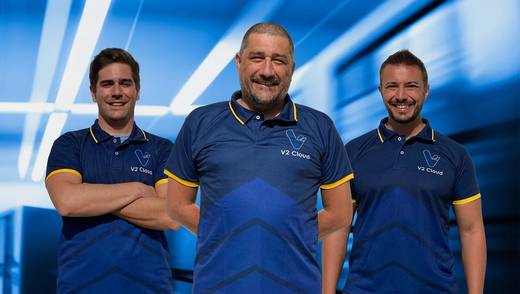
Your V2 CloudCare team — real people, on the line.


