20 Virtual Desktop Solutions to Upgrade Your Remote Workflow
July 14, 2026

July 14, 2026
In this era of remote work, having a reliable virtual desktop solution is no longer a luxury; it’s a necessity.
Cloud desktops or virtualized desktops provide secure and user-friendly virtual desktop infrastructure solutions for remote workers, offering features such as data protection, access from various devices, compliance options, user controls, and secure and fast access.
With 74% of companies globally transitioning to permanent remote work, according to a 2022 Gartner survey, the demand for robust virtual desktops has surged.
Virtual desktops or VMs not only offer the flexibility of working from anywhere but also ensure data security, operational efficiency, and significant cost savings. This comprehensive guide delves into the top 20 virtual desktop solutions reshaping the remote workflow.
Virtual desktop solutions provide secure, remote access to a user’s desktop environment, hosted on a centralized server. These solutions, including desktop as a service (DaaS), are critical in facilitating remote work, ensuring data security, and simplifying IT management.
By leveraging cloud technology, virtual desktops enable users to access their desktops, applications, and data from any device, anywhere.
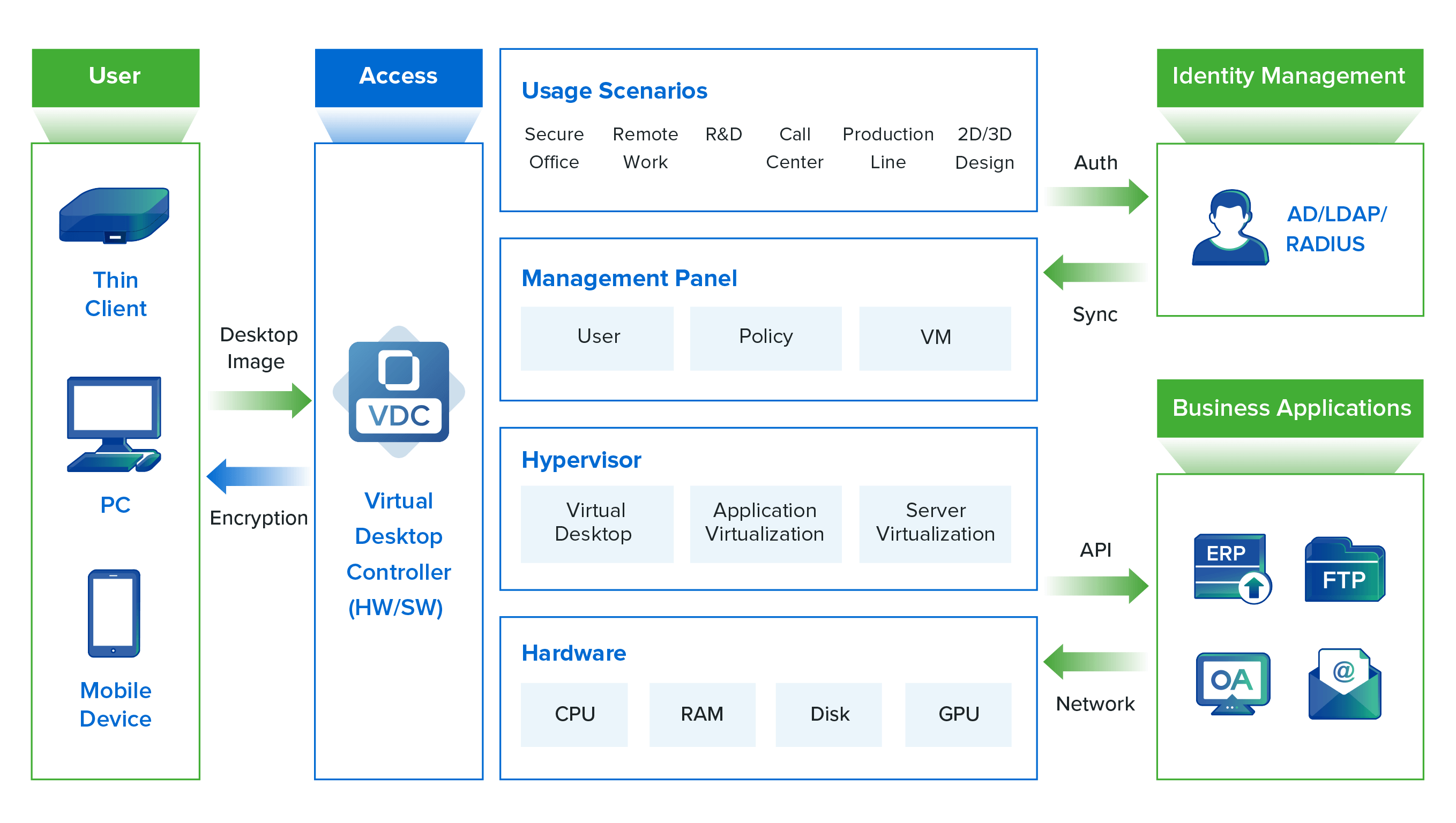
Virtual Desktop Infrastructure explained.
VD solutions offer unparalleled advantages in terms of accessibility, security, cost-effectiveness, scalability, and IT management.
Let’s explore the benefits of virtualized desktops in detail, highlighting how they can transform your remote workflow into a more streamlined, secure, and cost-efficient operation.
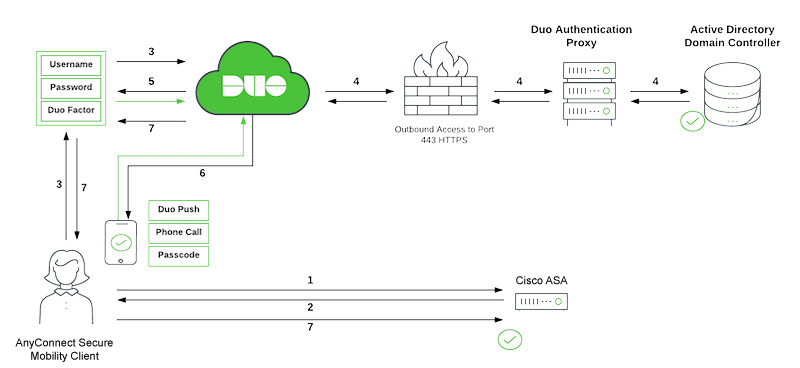
Virtual desktops can be reinforced with Multi-Factor Authentication solutions.
In the quest to find the perfect virtual desktop solution for your business, a deep-dive analysis of your specific needs and the capabilities of various solutions is crucial. This involves a multi-faceted approach, considering several key aspects:
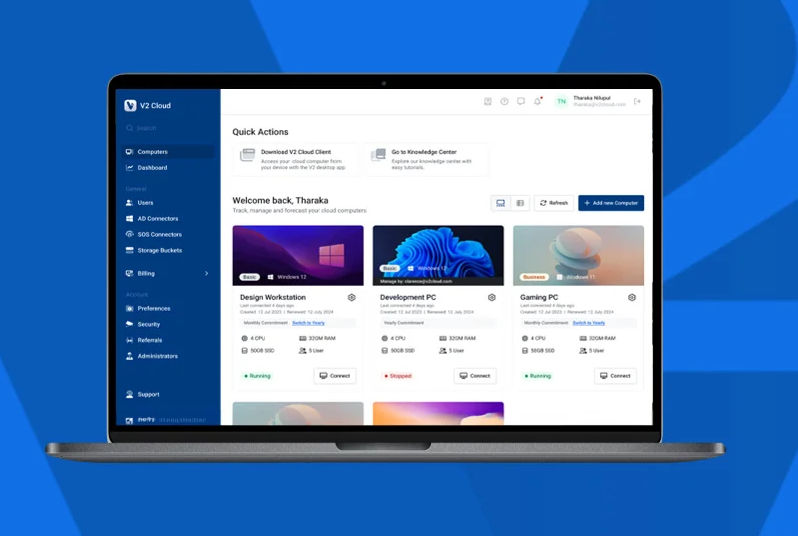
At V2 Cloud, we built our platform for the businesses that other virtual desktop providers overlook: SMBs, MSPs, and ISVs that need cloud desktops without a dedicated IT team to run them. As a fully managed Desktop as a Service platform, our cloud desktops come with the infrastructure, updates, security patching, and support handled for you, so you can deploy virtual desktops in about 20 minutes instead of weeks.
Performance is consistently fast, with quick startup times and low latency across demanding workloads, while predictable pricing helps control costs as resource requirements grow. Our pricing is per VM, sized by workload, and multiple users can share a single machine, so there are no surprise consumption charges at the end of the month.
As your needs scale, advanced networking options and customizable desktop configurations mean you don’t outgrow the platform, whether you’re an MSP managing dozens of client environments or an ISV hosting applications like QuickBooks, Sage, or AutoCAD for hundreds of end users.
Best for: SMBs, MSPs, and ISVs that want managed cloud desktops with predictable pricing and human support. Talk to a cloud expert or start a risk-free trial.
Part of the AWS ecosystem, this tool offers a robust and scalable virtual desktop solution. It provides seamless integration with AWS services and a pay-as-you-go pricing model, catering to businesses seeking flexibility and scalability.
Amazon WorkSpaces brings broad scalability but might present a steeper learning curve for smaller businesses. It supports both Linux and Windows virtual machines, offering compatibility with various operating systems and the option to add software like Office for a monthly fee.
This solution is designed for large enterprises and hybrid work environments, focusing on security and flexible cloud solutions. It excels in hybrid cloud and on-premises deployments, making it an ideal choice for organizations with complex IT infrastructure.
Citrix DaaS stands out for its customizable, secure, and scalable virtual desktop environment, targeting businesses needing a robust and versatile VDI solution. Additionally, Citrix DaaS supports virtual apps, enabling employees to access corporate resources from any device, ensuring secure and remote access to data and applications.
Azure integrates seamlessly with the Microsoft ecosystem, including Office 365 and Azure services, making it a go-to choice for businesses deeply integrated with Microsoft products.
With higher pricing, Azure Virtual Desktop offers extensive features and integrations, beneficial for Microsoft-centric organizations. Microsoft Azure supports Azure Virtual Desktop by providing a robust cloud platform for hosting virtualized desktops and applications.
This is another solution tailored for large corporations, focusing on enterprise scalability and robust security features.
It differentiates itself by providing advanced features for enterprise-centric needs and stands out among other VDI solutions for large organizations with complex IT requirements. VMware Horizon Cloud leverages virtual machines to host virtual desktops, provide secure access to company resources, and enable users to securely access data and apps stored in the cloud or on-premises.
This company offers an affordable and user-friendly virtual desktop solution for small businesses and individual users.
It is known for its straightforward management and intuitive user interface, although it might not be suitable for the demanding environments of larger enterprises.
Nutanix provides hybrid cloud deployment flexibility and is optimized for graphics-intensive applications, making it suitable for industries like design and engineering.
Its performance optimization caters to businesses needing high-performance graphics in their virtual desktops.
This solution leverages the infrastructure of Google Cloud and integrates with Google Workspace, offering a cohesive and customizable solution for developers.
It stands out for its robust infrastructure and integration capabilities, appealing to businesses looking for deep Google ecosystem integration.
Nerdio approaches VDI management with its focus on automation, making it cost-effective for businesses with existing on-premises VDI deployments.
Its integration with Microsoft Hyper-V and emphasis on simplifying VDI management through automation make it a compelling choice for businesses seeking efficient VDI management solutions.
This solution focuses on application streaming and remote access, offering quick deployment and easy user onboarding.
It’s a cost-effective option for businesses with specific use cases that require rapid deployment and minimal management overhead.
IBM Cloud Virtual Servers offer a robust virtual desktop infrastructure (VDI) tailored for enterprises needing scalable and secure remote desktop solutions.
With seamless integration into IBM’s extensive cloud ecosystem, this solution supports high-performance workloads and provides advanced security features. However, the complexity and cost might be prohibitive for smaller businesses. IBM Cloud Virtual Servers for VDI also support various operating systems, including Windows, Linux, Ubuntu, and iOS, allowing users to securely access data and applications from different devices and operating systems.
Parallels RAS provides an easy-to-deploy VDI solution with strong focus on application and desktop delivery.
It offers cross-platform support, ensuring a consistent experience on Windows, macOS, Linux, iOS, and Android devices. Its simplicity and cost-effectiveness are beneficial for SMEs, though it may lack the advanced features required by larger organizations.
Huawei FusionAccess delivers a virtual desktop solution designed for both private and public cloud environments.
It excels in providing a high-quality user experience and robust data security. FusionAccess is particularly suited for industries with stringent data protection requirements but may require significant initial investment and expertise.
Scale Computing’s HC3 VDI is known for its simplicity, scalability, and cost-effectiveness. It is designed for small to mid-sized businesses looking for an affordable yet powerful VDI solution.
Its ease of use and rapid deployment make it an attractive option, although it might not meet the needs of larger enterprises with complex IT environments.
Workspot offers a cloud-native VDI platform that provides high-performance virtual desktops and workstations on public clouds such as AWS, Azure, and Google Cloud.
Its strong emphasis on security, performance, and scalability makes it ideal for enterprises. The subscription-based model and reliance on public cloud providers may impact cost considerations for some businesses.
Accops HyWorks provides a secure and comprehensive virtual desktop and application delivery solution.
It is particularly suited for organizations in healthcare, finance, and education due to its robust security features and compliance with industry regulations. Smaller businesses might find the initial setup and complexity challenging.
Sangfor aDesk offers a user-friendly VDI solution with a focus on delivering a seamless desktop experience. It supports both Windows and Linux environments and provides robust security and management features.
While suitable for SMEs, larger enterprises may require additional customization and integration capabilities.
NComputing vSpace Pro is an affordable VDI solution designed for educational institutions and small businesses.
It offers a simple setup and management interface, supporting multiple users on a single device. However, it may lack the advanced features and scalability required by larger organizations.
Inuvika OVD Enterprise delivers a flexible and cost-effective VDI solution for businesses looking to deploy virtual applications and desktops.
It supports multiple operating systems and provides a consistent user experience. While it offers a competitive pricing structure, its feature set may not be as extensive as those of larger VDI providers.
Paperspace provides cloud-based virtual desktops and workstations, focusing on high-performance computing and AI workloads.
It is suitable for industries requiring intensive computational resources, such as design, engineering, and data science. The pricing model based on usage can be cost-effective, but managing expenses might be challenging for some businesses. Windows Virtual Desktop can also be integrated with Paperspace, offering users access to Windows desktops and applications from anywhere, enhancing flexibility and security.
Industries that benefit the most from implementing virtual desktop solutions include information technology, healthcare, finance, education, and creative fields like design and engineering.
In the IT sector, virtual desktops streamline management, enhance security, and facilitate remote support. Healthcare providers use them to ensure compliance with regulations, protect sensitive patient data, and support telemedicine. Financial institutions rely on virtual desktops for robust security measures, disaster recovery, and compliance with industry standards.
In education, virtual desktops provide consistent access to educational resources and applications, supporting both in-class and remote learning environments. Creative industries benefit from the high-performance computing capabilities and flexibility needed for graphic-intensive applications.
Each sector must tailor virtual desktop solutions to address specific regulatory, operational, and performance requirements to optimize their remote workflows.
Virtual desktop solutions handle offline access and connectivity issues through several strategies to ensure continuous productivity for remote workers. Primarily, they offer features like local file caching and synchronization, allowing users to access and work on files even when offline.
Once connectivity is restored, these changes are synced back to the server, ensuring data consistency. Some solutions also provide offline modes for specific applications, enabling users to continue their tasks without an active internet connection.
Additionally, virtual desktop solutions often incorporate robust redundancy and failover mechanisms in their infrastructure to minimize downtime. They leverage multiple data centers and backup systems to ensure high availability and reliability.
Furthermore, many solutions integrate with virtual private networks (VPNs) and other secure connection protocols to maintain a stable and secure connection, reducing the impact of connectivity issues on remote productivity.
These measures collectively help mitigate the challenges associated with offline access and connectivity disruptions, supporting a seamless remote working experience.
Virtual desktop solutions offer greater flexibility, enhanced security, and centralized management. They allow users to access their desktop environments from any device and location, promoting mobility and remote work efficiency.
This flexibility can lead to increased productivity as employees can work from anywhere and at any time. Additionally, virtual desktops provide a consistent user experience across devices, ensuring that applications and data are always accessible in the same way.
Security is another significant impact, as virtual desktops centralize data storage and management, reducing the risk of data breaches and loss compared to traditional desktops that store data locally. Centralized management simplifies IT tasks such as software updates, security patches, and troubleshooting, reducing downtime and allowing IT staff to focus on more strategic activities.
The right virtual desktop solution can significantly enhance your operational efficiency and security. It’s crucial to assess each option against your business requirements, considering scalability, performance, security, and budget.
A well-chosen solution not only addresses current needs but also supports future growth and adaptability in a dynamic business environment. With its flexible pricing, exceptional customer support, and customizable features, V2 Cloud is tailored to meet the diverse and evolving demands of today’s businesses.
Interested in seeing how V2 Cloud can transform your remote workflow? Talk to a Cloud Expert Today and discover a solution that evolves with your business, ensuring you stay ahead in the ever-changing landscape of remote work.
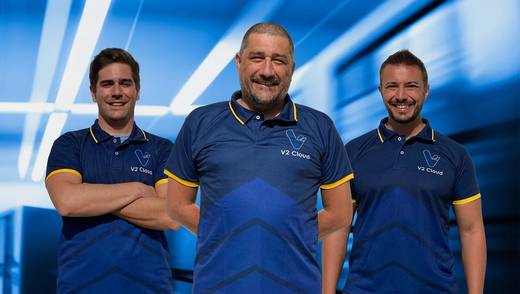
Your V2 CloudCare team — real people, on the line.